
AI and ERP: from understandable hesitation to controlled orchestration

Most organizations see the potential of AI —but hesitate the moment it involves their ERP. Rightly so. We get it. That’sexactly why we build it differently.
The hesitation is understandeble
In conversations with managers and directors,we hear it time and again: “AI sounds interesting, but we’d rather not touch our ERP.” And honestly, we fully understand that. Your ERP is the backbone of your organization. It holds your customer data, your financial flows, your logistics. The idea of an AI model operating freely inside it — without clear boundaries, without control, without an audit trail — is not a comfortable thought.
The question, then, isn’t whether organizations want to use AI. That desire is present almost every where. The question is: how do you do it in a way that is safe, controllable, and manageable?
Why existing AI integrations fall short
Many AI integrations today work via direct API connections or broad access rights. This creates a number of problems: you don’t know exactly what the AI did, you can’t easily reverse it, and you have limited control over what is and isn’t possible. For a chatbot answering FAQs,that might be acceptable. For an agent executing actions in your ERP, it certainly is not.
What you need isn’t a loose integration, but acontrolled intermediary layer. A layer that determines what AI is allowed to ask, what it may execute, who has authorized it — and that records all of it.
How Any2info approaches it: agents, MCPs, and a platform that stays in control
At Any2info, we have embraced MCP (ModelContext Protocol) as the foundation for secure AI orchestration. MCP makes it possible to expose systems — your ERP, BI solutions, Microsoft 365, and other platforms — to AI models such as Claude (Anthropic), ChatGPT (OpenAI), or Gemini (Google) through standardized tools. Those models can then not only retrieve information, but also execute actions — in the systems you connect, in the way you define. But the key lies in how you set that up.
Our platform acts as the orchestrating layer between AI and your business systems. In practice, that means:
• MCP server builder: with the Any2info MCP builder, you define exactly what an agent is allowed to see and do. You configure which tools, prompts, and resources are available — and connect them to platforms such as Exact (Globe, Synergy, Online), AFAS, or Business Central. Rather than a generic ERP integration, you can set up a targeted MCP for Sales, HR, Service, or Finance. Your processes, your boundaries.
• External MCP servers: alongside your own MCP servers, you can connect external ones — such as Microsoft 365, planning software like vPlan, BI platforms like Sumatra, or any other MCP-compatible system. This means AI works not just within your ERP, but across your entire software landscape.
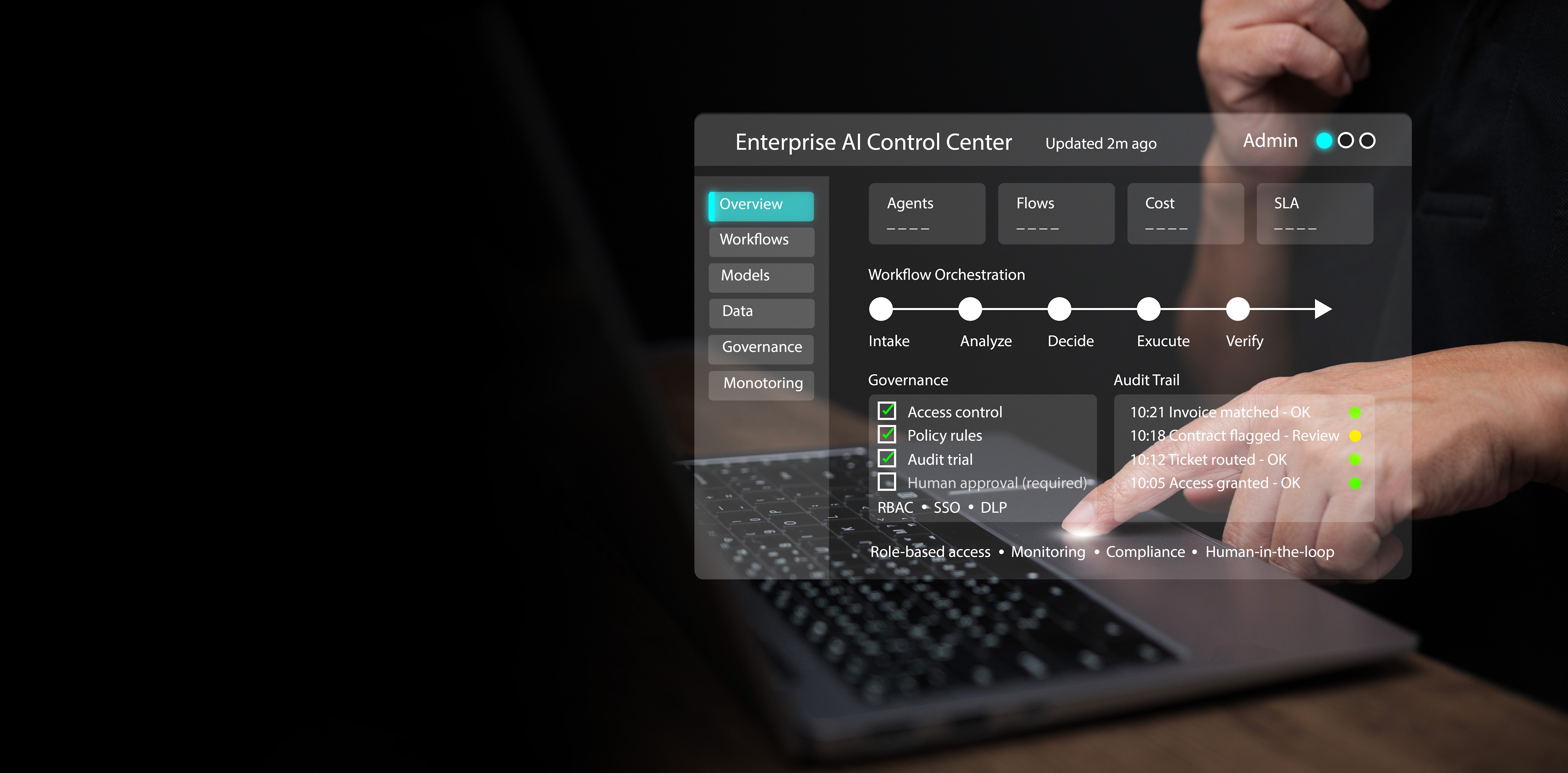
• Controlled access via OAuth: every connection between AI and your systems runs through OAuth and standard authentication protocols. No broad access rights, no open doors — only explicit, managed connections that define precisely who is authorized to do what.
• Structured interaction: AI agents don’t roam freely in your systems. They act exclusively through pre-defined dataflows and tool calls. What an agent may ask and execute is determined by you in advance. No surprises, no unintended actions.
• Logging and reporting: every interaction between AI and your business systems is recorded: who asked what,which action was executed, and what the result was. Fully transparent, fully auditable — including after the fact.
• Humans remain in control: for critical actions, the platform includes an explicit approval step. AI analyzes and proposes. The human decides. Always.
From single agents to real orchestration
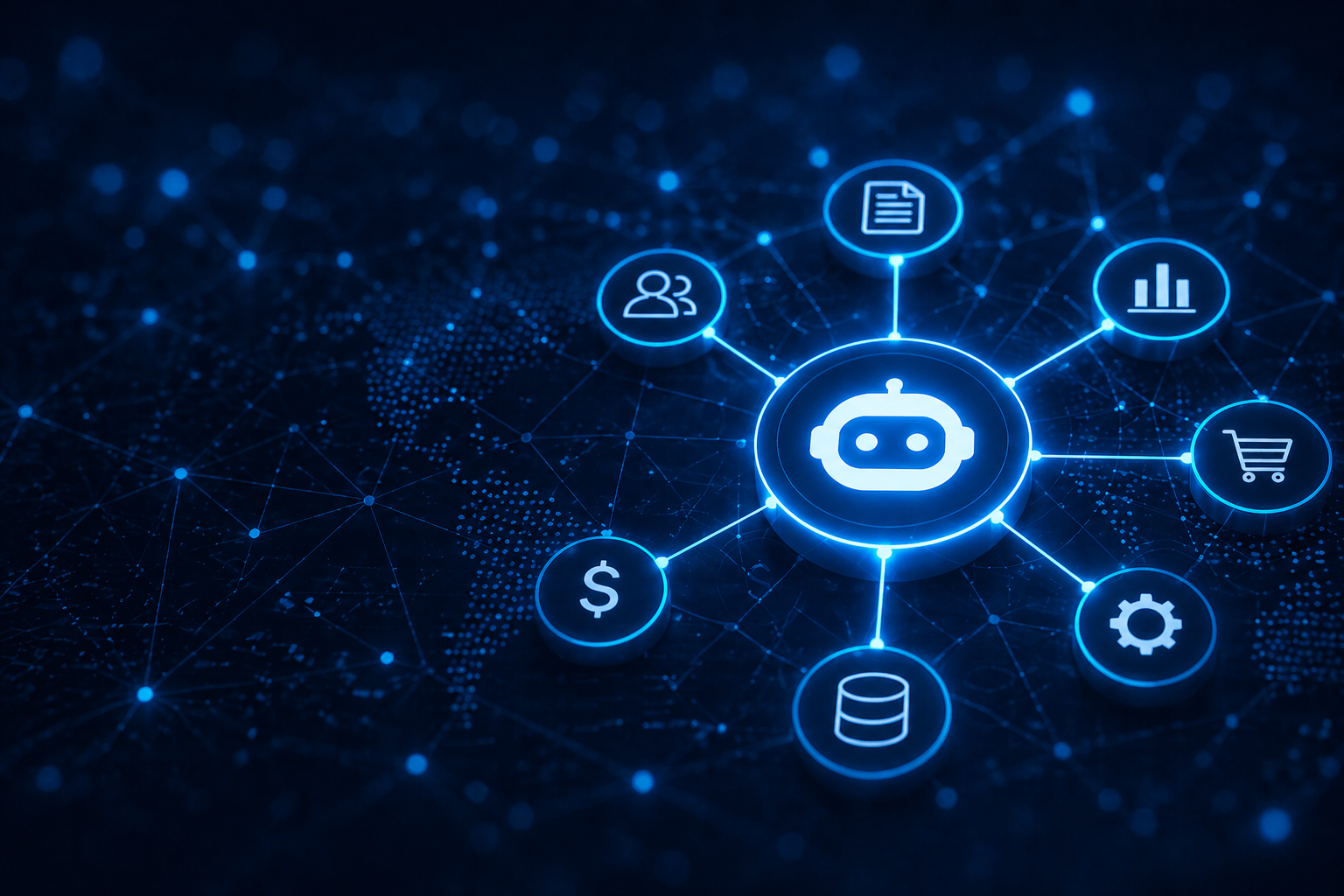
With this approach, AI doesn’t become a loose tool sitting next to your ERP — it becomes a controlled layer above it, able to combine multiple systems, interpret information, and then act in a structured way.
Not , but — with full control at every step.
That is what we mean by AI Orchestration: not AI loosely connected to your systems, but AI that collaborates responsibly, in a structured and secure way, with your existing software landscape.